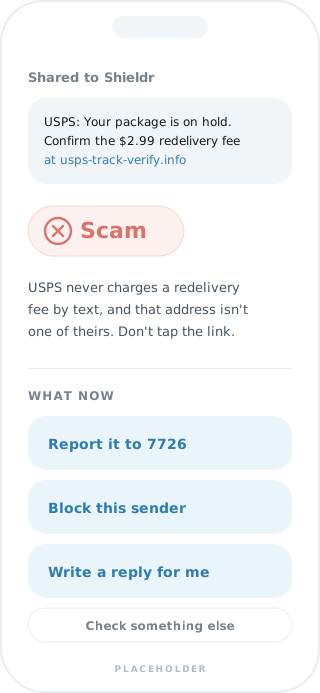
Screenshot the text. Forward the email. Share the voicemail. Shieldr reads it and tells you straight: safe, suspicious, or a scam.
Works from the iOS share sheet — no copying, no typing.
It looks like the post office. It looks like your bank's fraud department. It looks like your daughter texting from a number you don't recognize because her phone died.
And it always arrives at the worst possible time — merging onto the highway, twelve minutes into a meeting, 11pm when you're too tired to be careful. It asks for one small thing. Right now. Urgency is the whole trick.
That half-second of hesitation you feel is the right instinct. Shieldr is what you do with it.
You weren't expecting a package. But you order things. And $2.99 is nothing. That's the entire design.
You shouldn't have to describe a scam to get help with it. Just hand it over.
Most security tools hand you a threat score and leave you to figure out what to do with a 74. Shieldr picks a side.
It reads the message the way a careful person would — who it's from, how it's worded, where the link actually goes, how hard it's pushing you to hurry — and comes back with one word and a reason you could repeat to someone else over the phone.
USPS never charges a redelivery fee by text, and usps-track-verify.info isn't one of their addresses — the real one ends in usps.com. The 24-hour deadline is there to stop you checking. Don't tap it, and don't enter a card.
Most things land here — and saying so plainly, without a lecture attached, is half the point of the app.
Something specific is off, but it isn't a known scam. You'll be told what caught our eye — not left with a shrug.
Not for security professionals. For everyone else.
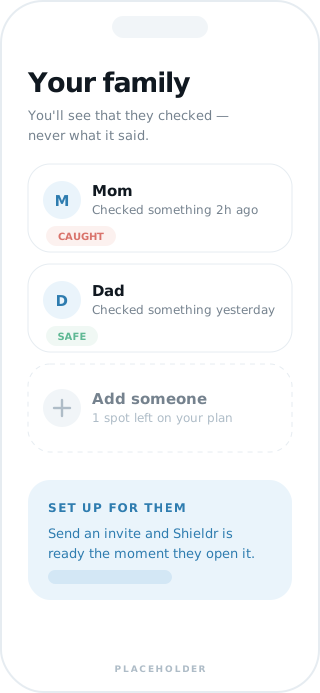
That's the whole dashboard. No sender. No screenshot. No message text — because you're not supposed to be reading her mail.
So set them up in about two minutes — from your phone, on their behalf, using your card. They open an app that already works. No account to create, no settings to find, nothing to configure while you're on speakerphone trying to explain what a share sheet is.
Then you get the version of peace of mind that doesn't cost them their privacy: you see that she checked something and how it came back. Not who it was from. Not what it said.
Watching out for someone was never supposed to mean reading their messages.
Pick Solo for yourself. Pick Family if there's someone you worry about.
There's no free tier and there are no ads. Every check costs us real money to run, and we'd rather charge you for it than make money off what we learn about you. Cancel any time from your App Store subscriptions.
Credit unions, senior centers, consumer-protection groups, local news desks, and creators whose comments are full of "did anyone else get this text?" If you're already the person people forward these to, let's talk.
Get in touch →You'll have somewhere to send it.